Introduction
On-page SEO is your most direct lever for search visibility. Learn exactly what it is, why it still matters, and the 11 proven techniques you can apply today.
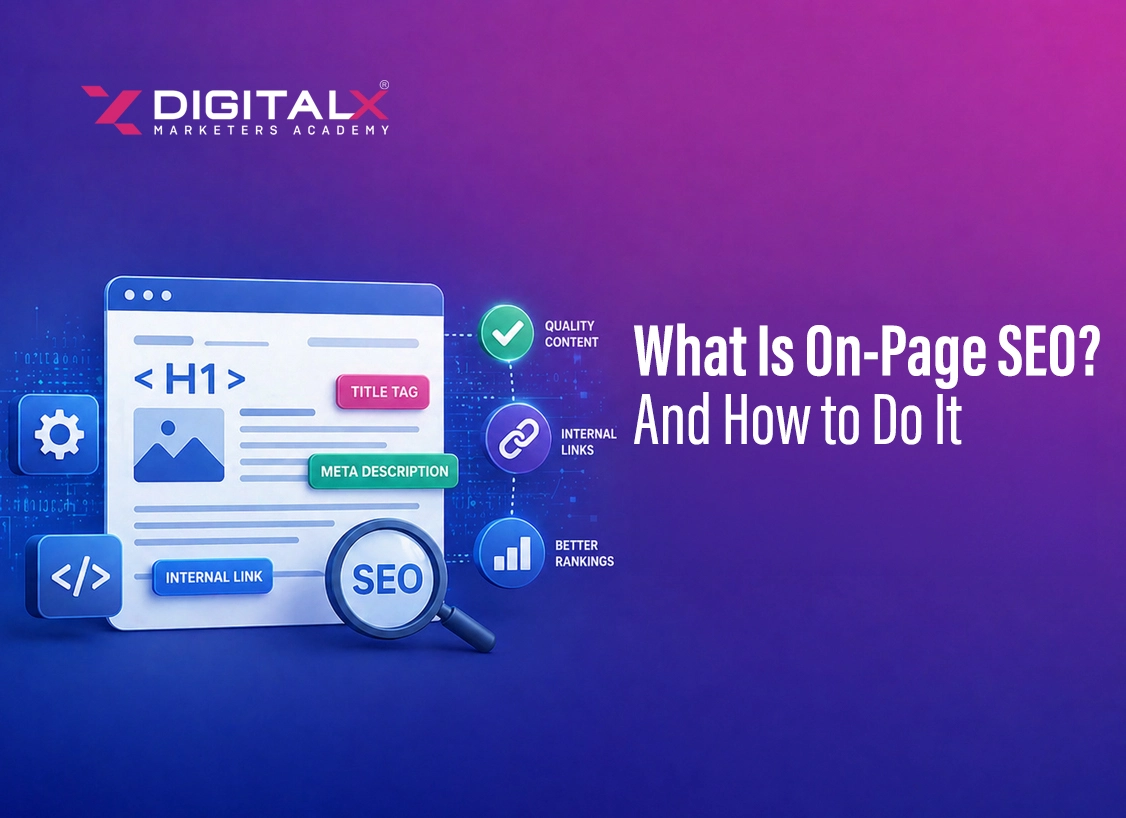
On-page SEO is the process of optimizing a webpage’s content and structure — text, images, headings, URLs, and more — so that traditional search engines like Google and AI tools like ChatGPT surface it for the right queries.
What Is On-Page SEO?
On-page SEO refers to every optimization you make directly on your webpages — not behind the scenes in server configs, and not through external tactics like link building. It’s the content, the HTML code, the structure, and the experience you deliver on the page itself.
This includes things like writing a compelling title tag, placing your target keyword naturally in the first paragraph, compressing your images for faster load times, and organizing your content with clear headings. All things you control entirely.
On-Page SEO vs. Off-Page SEO
On-page SEO covers everything you do on your site. Off-page SEO covers everything done outside your site that influences your rankings — like earning backlinks, guest posting, and social media marketing.
On-page SEO techniques
- Strategic keyword placement
- Optimized title tags
- Descriptive URL slugs
- Meta descriptions
- Content structure with headings
- Internal linking
- Image alt text
- Page speed optimization
- Schema markup
Off-page SEO techniques
- Link building
- Guest posting
- Local SEO citations
- Social media marketing
- Influencer marketing
- Digital PR
- Brand mentions
On-page SEO is the best starting point because you have full control over it. You don’t need to convince anyone else, wait for links to arrive, or depend on outside platforms.
On-Page SEO Techniques for 2026
Place target keywords strategically
After identifying your target keyword — in this case, on-page SEO techniques — place it in the locations search engines weigh most heavily:
- H1 heading (your page title)
- First paragraph of the body
- At least one H2 subheading
- URL slug
- Image alt text
The key word is “naturally.” Forcing a keyword into every sentence hurts readability — and both users and AI systems can tell.
Write accurate, compelling title tags
Your title tag is what shows up in browser tabs and search result listings. It’s often the first impression a user gets before visiting your page.
- Keep it between 50–60 characters to avoid truncation
- Include your primary keyword early
- Match it closely to your H1
- Make every title unique across your site
- Use attention words like “best,” “guide,” or “2026” when relevant
Optimize your URL slugs
A clean, descriptive URL slug tells users and search engines exactly what a page is about before they even land on it.
- Aim for 3–5 words
- Include your target keyword
- Use hyphens to separate words (not underscores)
- Avoid dates, numbers, and tracking parameters
Good example: yourbrand.com/blog/on-page-seo-techniques
Write accurate meta descriptions
Meta descriptions are HTML summaries that can appear as snippets in search results. They don’t directly affect rankings but they heavily influence click-through rates.
- Keep them under 105 characters for full display
- Include your target keyword naturally
- Use active voice and a clear call to action
Example
“Learn 11 proven on-page SEO techniques to boost rankings and get cited by AI tools in 2026.”
Structure content with headings
Headings (H1 through H6) organize your content for readers and signal structure to search systems. AI models in particular extract answers from clearly headed sections.
- Use one H1 — your page’s main title
- Use H2s for primary topic sections
- Use H3s for sub-topics within each section
- Make each section self-contained — AI extracts individual sections, not full articles
- Answer the heading’s question in the very first sentence below it
Create unique, helpful content
Quality content is the core of every on-page SEO strategy. No amount of technical optimization compensates for thin or generic content.
- Research your audience’s actual questions before writing
- Include original insights, data, or expert quotes competitors lack
- State your main point upfront, then expand
- Use images and video to explain complex ideas
- Update your content regularly — AI search engines prefer fresh, accurate pages
Add strategic internal links
Internal links connect your pages, help users navigate, and distribute authority across your site. They also help search engines discover and index new content faster.
- Link to topically related pages your readers would benefit from
- Use descriptive anchor text (e.g., “on-page SEO checklist” not “click here”)
- Link from high-authority pages to pages you want to rank
- Don’t over-link — aim for relevance, not quantity
Add external links to credible sources
Linking out to authoritative, relevant sources builds trust with readers and has been shown to improve AI search visibility.
- Only link to high-quality, relevant sources
- Use descriptive anchor text
- Don’t clutter your content — balance is key
Write descriptive image file names and alt text
Images are often overlooked in on-page SEO — yet they directly affect image search visibility and accessibility for users relying on screen readers.
- File name describes the subject: on-page-seo-checklist.jpg
- Alt text describes the image in detail: “Checklist of 11 on-page SEO techniques”
- Keep alt text under 125 characters
- Skip alt text only for decorative images
Optimize for page speed
Slow pages lose rankings — and users. If a page takes too long to load, search engines may rank it lower, reducing its chance of being cited by AI systems that draw from top results.
- Use WebP format for photos, SVG for logos
- Compress images before uploading
- Minimize redirects where possible
- Measure with Google PageSpeed Insights regularly
Add schema markup
Schema is structured data code you add to your pages to give search engines richer context about your content. It can unlock rich snippets — enhanced search result listings with star ratings, prices, FAQs, and more.
- Article schema for blog posts
- Product schema for e-commerce pages
- Review schema for ratings
- Local Business schema for physical locations
Use Google’s Structured Data Markup Helper to add schema and the Rich Results Test to verify it.
How to Measure On-Page SEO Success
Implementing on-page SEO techniques is only half the work. Tracking the results tells you what’s working — and where to improve next.
Frequently Asked Questions (FAQs)
1. What are on-page SEO techniques?
On-page SEO techniques are strategies used to optimize individual web pages to improve search engine rankings. These include keyword placement, content optimization, meta tags, internal linking, and improving page speed.
2. Why are on-page SEO techniques important?
On-page SEO techniques help search engines like Google Search understand your content better. This improves your chances of ranking higher and attracting relevant organic traffic to your website.
3. Where can I learn on-page SEO techniques in Kerala?
If you’re looking to build a career in SEO, joining a digital marketing course in Thrissur can help you learn practical on-page SEO techniques, keyword research, and real-world marketing strategies.
4. Is on-page SEO enough to rank on Google?
On-page SEO is the foundation of SEO, but combining it with off-page SEO and technical SEO gives the best results.
5. How long does it take for on-page SEO to show results?
On-page SEO results usually take a few weeks to a few months, depending on competition, keyword difficulty, and how well your content is optimized.